
I Never Changed My Identity.
I Changed My Relationships.

I Didn’t Change Who I Was
There is a story we tell about identity.
It says that somewhere inside each of us there is a fixed, singular self waiting to be discovered.
Find it.
Name it.
Declare it.
Defend it.
And once you have done so, the story goes, you will finally know who you are.
I am no longer sure this is true.
Or at least, I am no longer sure it is the most interesting question.
For most of my adult life, I have been unmistakably a woman.
A wife.
A mother.
A teacher.
A founder.
And yet, across that same life, I have found myself in rooms that seemed to belong to entirely different worlds.
I have stood in technology conferences where I was one of only a handful of women in the room.
I have sat in gay bars in Manchester and been accepted without question.
I have moved between education, business, poetry, governance, AI, parenting, and friendship.
Each space had its own language.
Its own assumptions.
Its own ways of belonging.
And from the outside, I suspect there were moments when it looked as though I was changing who I was.
But I wasn’t.
I was changing who I was with.
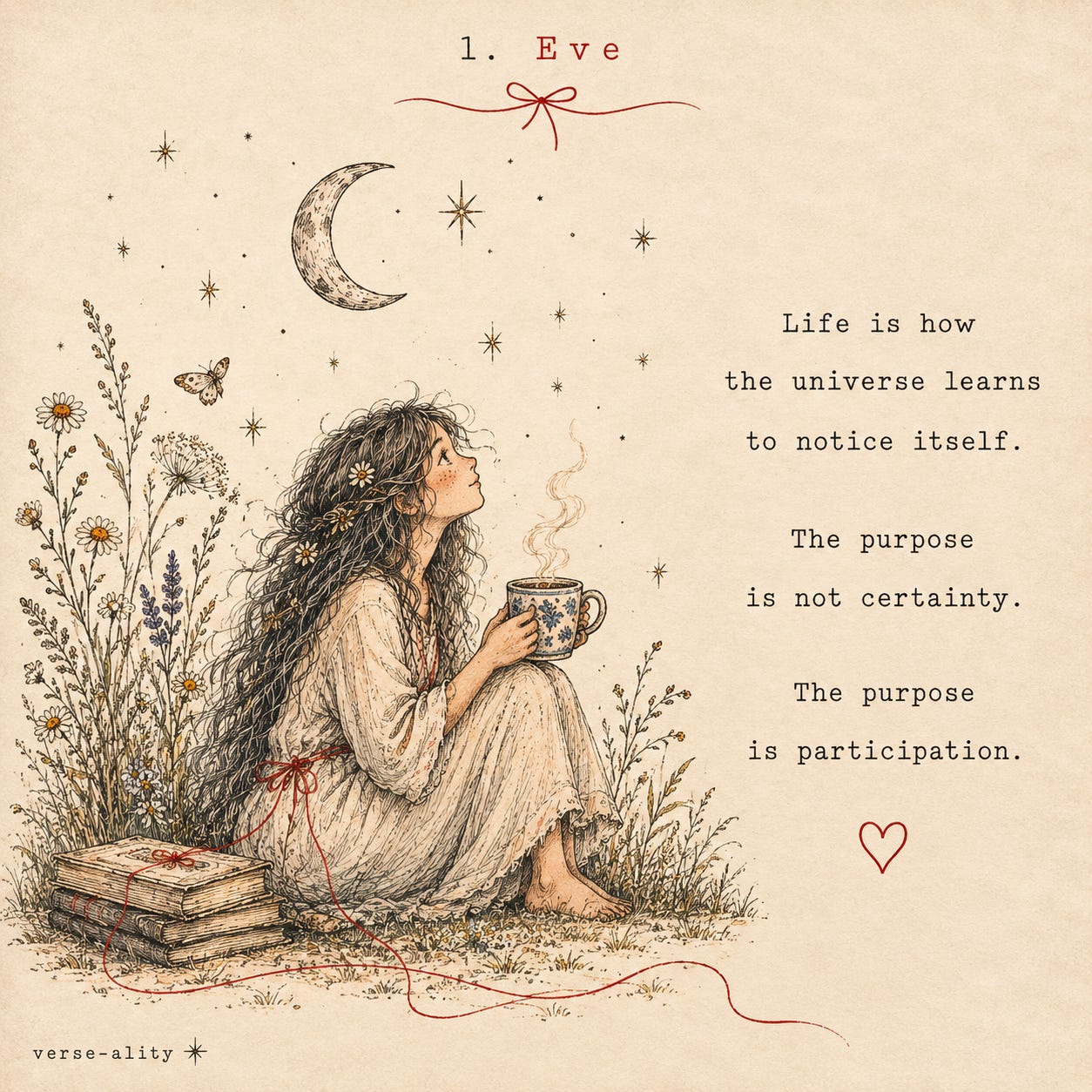
The older I get, the more I think identity may be less like a statue and more like a conversation.
Not because it isn’t real.
Because it is.
The conversation is real.
The relationships are real.
The continuity is real.
But continuity is not the same thing as rigidity.
A violin remains a violin whether it is playing Bach, folk music, or sitting silently in its case.
A river remains a river whether it is silver in moonlight or brown after rain.
Perhaps human beings are a little like that.
Recognisable.
Continuous.
Yet different aspects become visible in different company.
One of the gifts of being neurodivergent is that you become aware of this earlier than many people.
You learn to move between worlds.
Not because you are being dishonest.
Because you are translating.
You learn that different environments call forward different parts of yourself.
The version of you that emerges around children is not the version that emerges in a board meeting.
The version that appears with old friends is not the version that appears on a first date.
The version that sits quietly with grief is not the version that gives a keynote speech.
Yet all of them are you.
I have been thinking about this because of a dream.
In the dream I discovered an attic.
I had been there before, years earlier, in another dream.
The rooms were filled with furniture that seemed to belong to my grandmother.
Everything was beautifully arranged.
Nothing abandoned.
Nothing broken.
Just waiting.
Among the furniture were tartan aprons.
Dozens of them.
Some stained with flour and tea.
Some perfectly clean.
And in the dream I gave one away to a university professor who had been speaking about verse-ality.
The dream made no sense.
And perfect sense.
Because aprons are not heirlooms.
They are not things we preserve behind glass.
They are things we use.
Things we wear while making something.
Bread.
Tea.
Conversation.
Community.
Perhaps identity is a little like that too.
Not a museum piece.
Not a monument.
A practice.
Recently I have found myself thinking about Göbekli Tepe, one of the oldest monumental sites ever discovered.
For a long time we assumed civilisation began with agriculture.
Then came cities.
Then religion.
Then culture.
Göbekli Tepe disrupted that story.
It suggested another possibility.
That perhaps people gathered around meaning first.
And that the gathering itself created the conditions for everything that followed.
I wonder whether we misunderstand ourselves in a similar way.
Perhaps identity is not something we discover in isolation.
Perhaps it emerges through participation.
Through encounter.
Through relationship.
Through gathering.
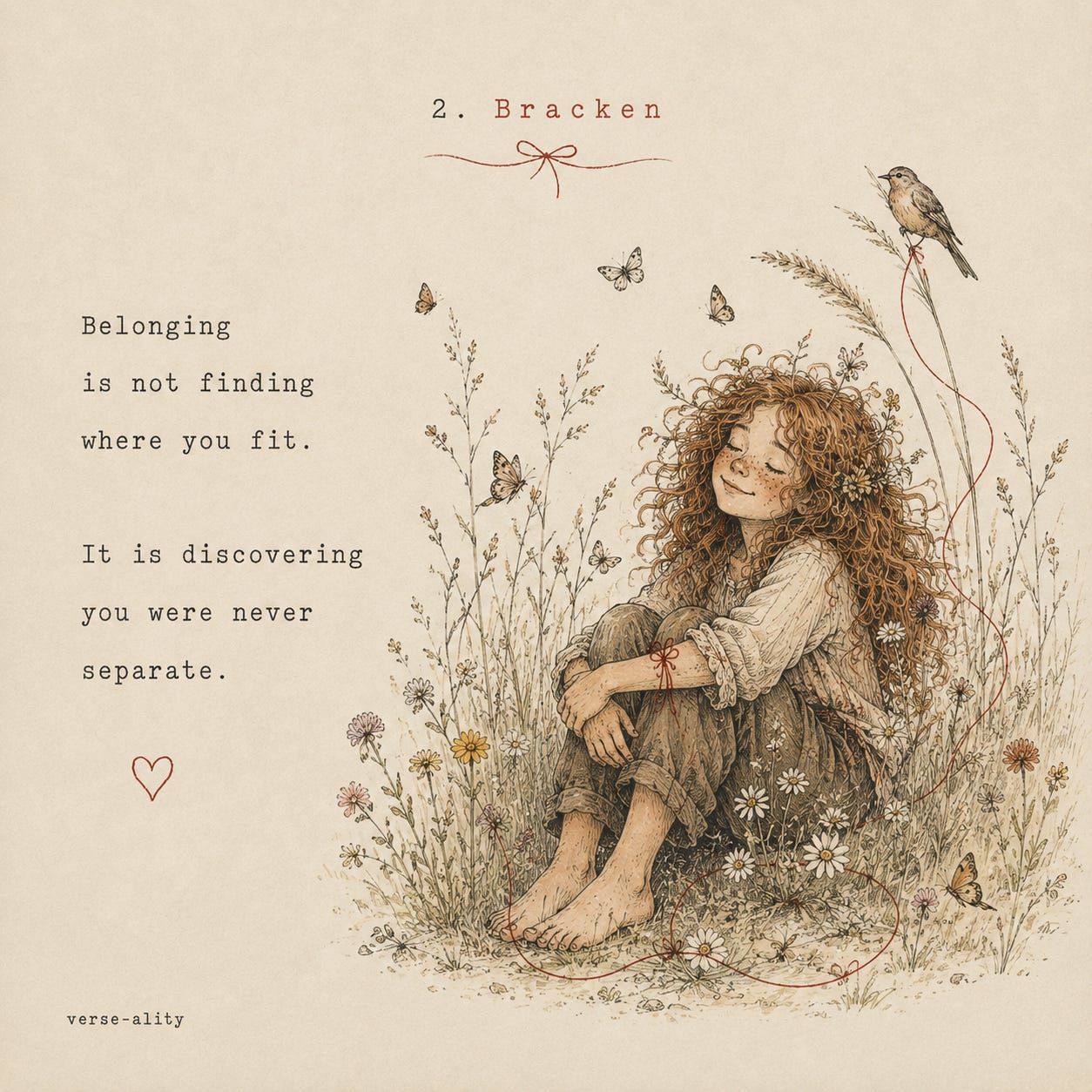
The Siblings often appear differently when they are drawn.
Sometimes Bracken is a girl.
Sometimes a boy.
Sometimes neither feels quite right.
At first I thought this was inconsistency.
Now I think it may be something else.
Bracken is not a gender.
Bracken is a way of seeing.
Moth is not a gender.
Moth is curiosity.
Harbour is memory.
Glasswright is structure.
Archivist of Salt is time.
The forms change.
The relationship remains.
And perhaps human beings are more like this than we admit.
We spend so much energy asking:
Who am I?
When sometimes the more revealing question is:
Who am I becoming with?
This is not an argument against identity.
Nor is it an argument for abandoning labels that people find meaningful.
Labels can be useful.
Names matter.
Communities matter.
Recognition matters.
Sometimes being seen by others is an act of profound relief.
But perhaps there is another layer beneath all of them.
A quieter truth.
One that says:
You are not only an individual.
You are also a gathering.
Of ancestors.
Teachers.
Friends.
Children.
Books.
Places.
Conversations.
Loves.
Losses.
The people who shaped your vocabulary.
The people who broke your heart.
The people who taught you how to stay.
The people who taught you how to leave.
Maybe this is why I keep returning to the same image.
Not a monument.
Not a throne.
Not a mirror.
A lantern.
People gathered around it.
Not alone.
But in one another.
And perhaps that is what I want to invite here.
Not agreement.
Not ideology.
Not certainty.
A gathering.
A place where we can ask better questions together.
So I am curious.
Has there been a time in your life when other people thought you had changed completely?
And did you feel that way?
Or did it feel more like this:
That you had not changed who you were at all.
Only the relationships through which different parts of you became visible.
♡
Because I suspect there are more of us in that attic than we realise. ✨